Irons have long been the go-to solution for removing creases from clothes, but the best clothes steamers are quickly becoming a popular alternative for smoothing out wrinkled garments, bedding and more. Designed to tackle creases with ease, modern steamers offer a convenient way to refresh fabrics without the need to set up a traditional ironing board.
Clothes steamers, with their compact handheld designs, are particularly popular among younger consumers who value speed, convenience and portability. Unlike bulky irons, they’re easy to store and ideal for quick touch-ups, making them a practical choice for busy lifestyles and smaller living spaces.
However, many people still prefer the reliability of a traditional iron, and for good reason. Irons can create sharper creases and are often more effective on heavier fabrics, such as linen and cotton, compared to lightweight clothes steamers.
Choosing between a clothes steamer and an iron comes down to how you’ll use it. Whether you need a portable option for travel or a more powerful appliance for tackling larger laundry loads, each has its own benefits. With this in mind, I asked three experts to compare the two and reveal which crease-buster comes out on top.
Read more: Best heated clothes airers that dry laundry fast, tried and tested
What is the difference between a clothes iron and a steamer?
“The main difference between a steamer and an iron is that a steamer releases hot steam to relax fabrics, leading the creases to drop and smooth out,” says Matt Connelly, CEO and laundry expert at dry cleaning chain ihateironing. “On the other hand, an iron uses a combination of pressure, heat and steam to flatten fabrics, thus ‘pressing’ down the creases.”
The size and function are marked differences, too. While handheld steamers are compact and heat up within seconds, irons require separate boards and can be a lot heftier as well as taking longer to heat up. Irons, however, can boast various temperature settings for different fabrics, while clothes steamers tend to have just one setting. When it comes to potential risks to clothes, there’s a higher risk of damage with an iron, owing to direct contact, whereas a steamer simply hovers over clothes.
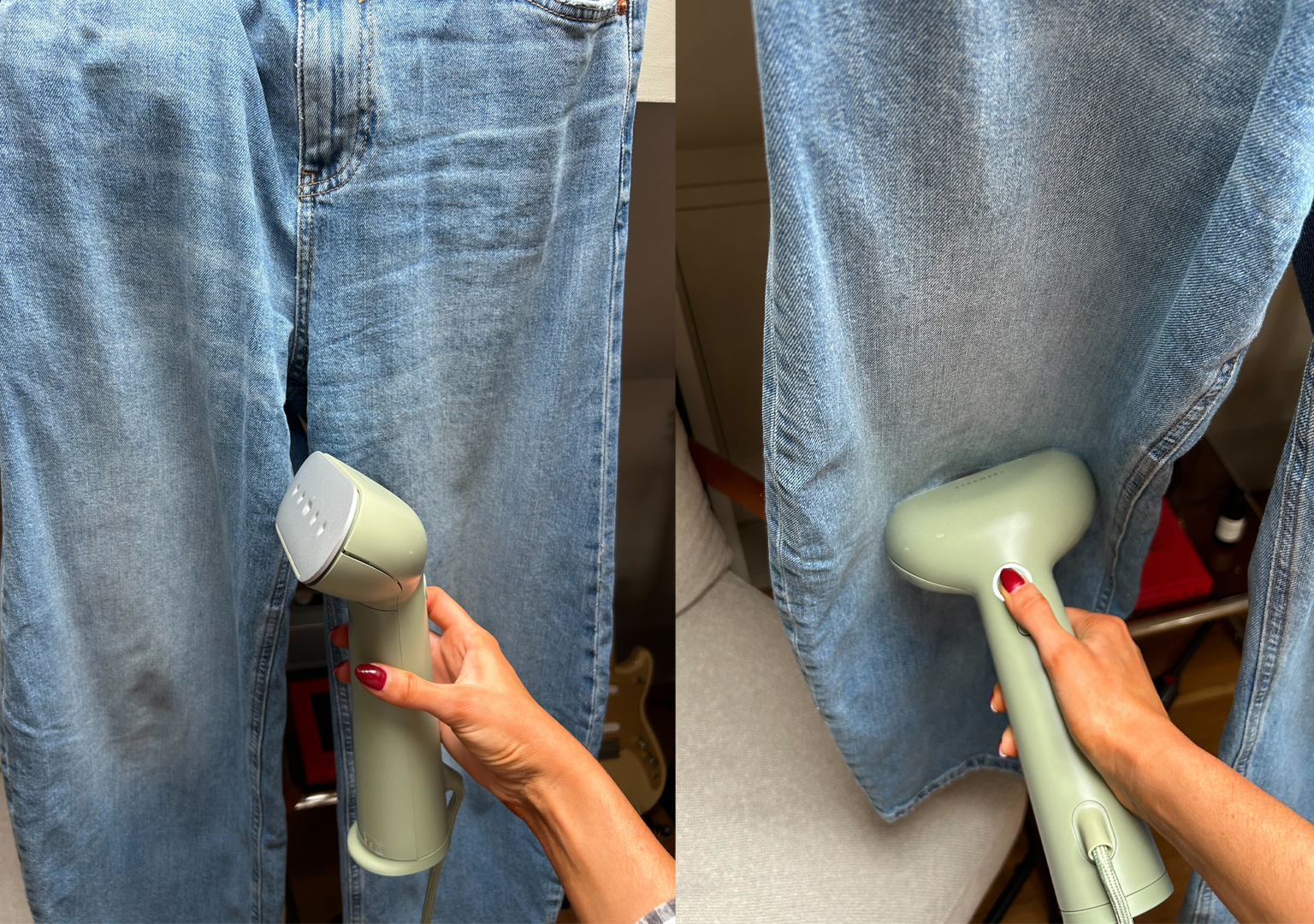
“As a stylist, I’ve never owned an iron, as I rely on my trusty steamer instead,” says fashion writer and stylist Harriet Davey. “Steaming on the day saves me from having to add in the additional step of ironing all my clothes before I put them away.”
“There’s a reason why fashion shows and retail shops around the world use steamers instead of irons,” adds Ben Fridja, founder of appliance brand Fridja. “They’re more versatile, kinder to fabrics, and pose almost no risk of damaging clothes,” he says.
The steamers we buy for our homes are usually handheld, but there are also upright models available that are often used on fashion shoots or in busy households with big laundry loads. “If you have the space (or a lot of clothes to steam), these are well worth it, as you can steam so many items in one go,” says Davey, who recommends Steamery’s cumulus model (£250, Steamery.co.uk).
What are the benefits of a clothes iron?
“Ironing creates a crisp and neat finish to fabrics, and it’s easy to control the direction of how you’d want to flatten out specific items,” says Connelly. “This is especially important for garments like shirts where the collars, cuffs, sleeves, and yoke need to be pressed down for a sharp look, and makes it easy to work around buttons or zippers.”
Another benefit of using an iron is how long they can run in a single session. A handheld steamer “can only hold a small amount of water, so is only best if you want to steam a couple of items (without having to refill) at a time,” says Davey.
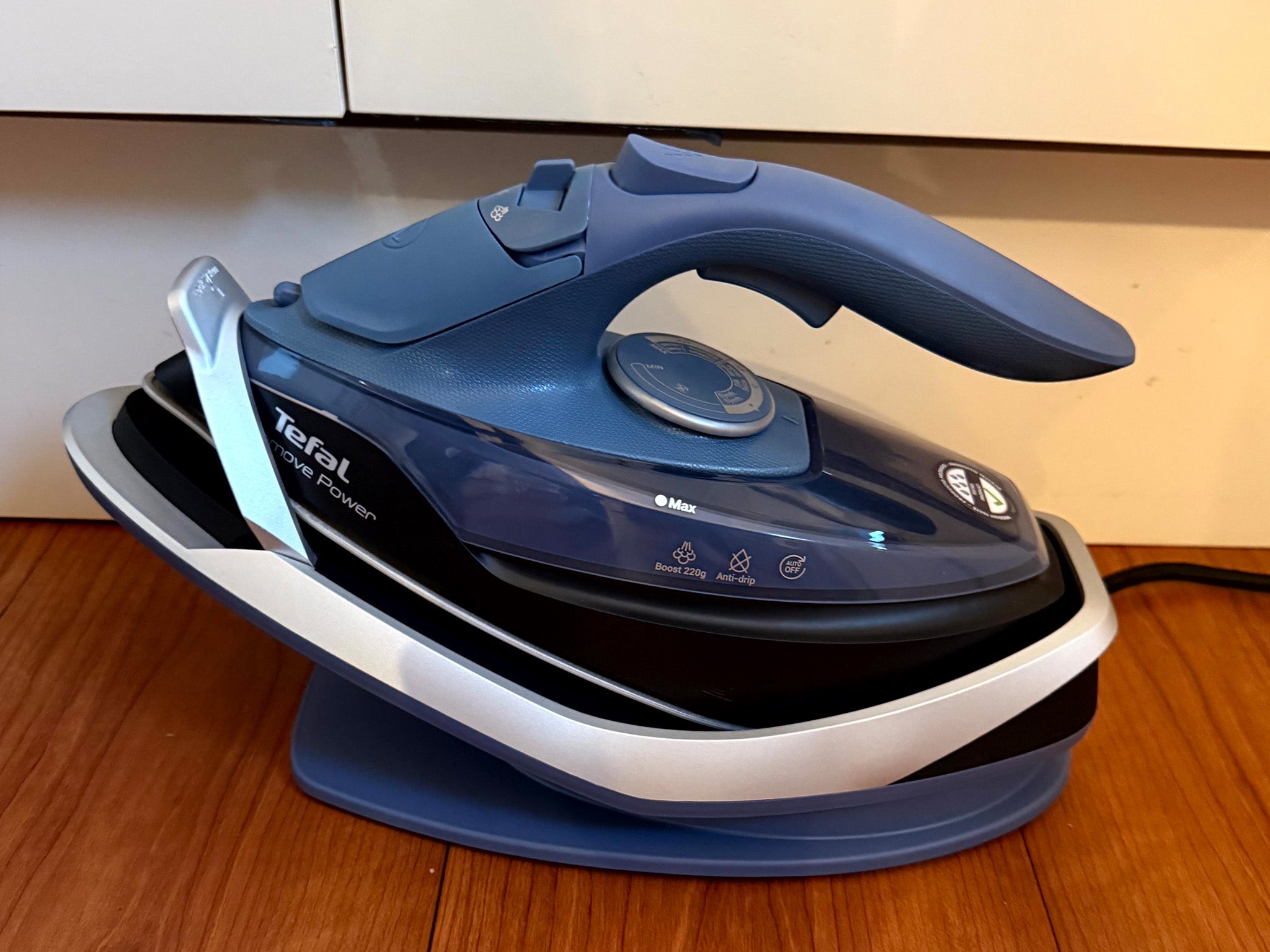
“Steamers might also struggle with heavy fabrics, for example, denim or thick cotton,” says Isabella Forgione, AO’s small appliances expert. “Many irons feature a steam boost setting and larger water tanks, making them better equipped to be more effective on thicker fabrics.”
What are the benefits of a clothes steamer?
Compared with traditional irons, which require a board (or other flat surface) to press on, handheld clothes steamers take up little space in storage. You also won’t need to keep repositioning your garment, as you can just hang it up and get steaming, speeding up the process compared with using a traditional iron.
Clothes steamers are also likely to be kinder to materials. When using a traditional iron, “the temperature could potentially scorch or damage delicate fabrics if you’re not careful of the setting”, says Forgione. Indeed, clothes with “delicate features like beads or sequins can also be damaged if too much heat or pressure is applied”, warns Connelly.
Comparably, handheld steamers are lightweight, making them ideal for travelling. “The joy of a handheld steamer is that it’s small enough to store at home, and take on holiday,” says Davey. “I’ve even taken mine travelling to Southeast Asia, as it’s the easiest way to be crease-free on the go.”
Fridja agrees, explaining that he always travels with a handheld steamer: “If you’ve ever borrowed a hotel iron, you know there’s a risk – it might be old, someone else might have stained it, and that’s the last thing you want before a big meeting.”
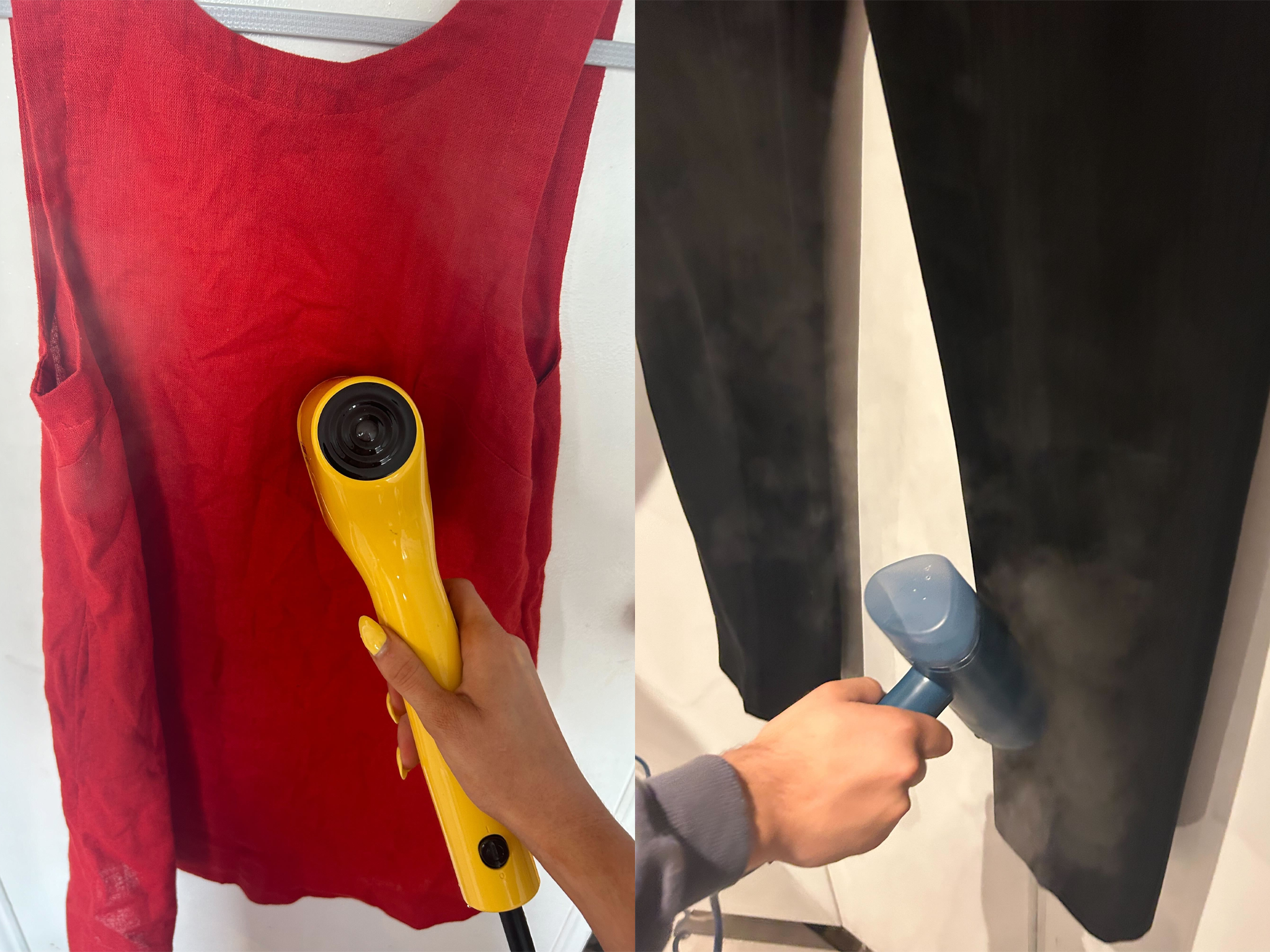
Davey adds that steamers “take the stress out of holiday packing – you don’t have to be as neat or tactical about packing certain items, as you can just steam before wearing them.”
A clothes steamer should be versatile enough to tackle a wide range of fabrics, from “suits, dresses, jackets, to things like veils and soft furniture like tablecloths and drapes/curtains”, says Fridja. “Both tools have their place, but for me, a steamer fits into daily life more conveniently.” According to Davey, clothes steamers also “last for years, especially if you use filtered water (to stop it getting limescale)”.
When should you use an iron on clothes?
As well as tackling larger loads, an iron also allows for more precision. “If you’re after a cleaner, crisper look, then you’d choose to go with an iron over a steamer,” says Connelly. “It gives you much more control over the direction of the sharp lines you’re putting into clothing.”
Ironing is also best for heavier fabrics such as cotton and denim, which require more pressure and heat to flatten deep wrinkles. This is “something that can be hard to achieve with a steamer, which may not remove them entirely from heavy materials, or they might require more effort and time to do so,” says Connelly.
Read more: Best steam irons that make light work of stubborn creases
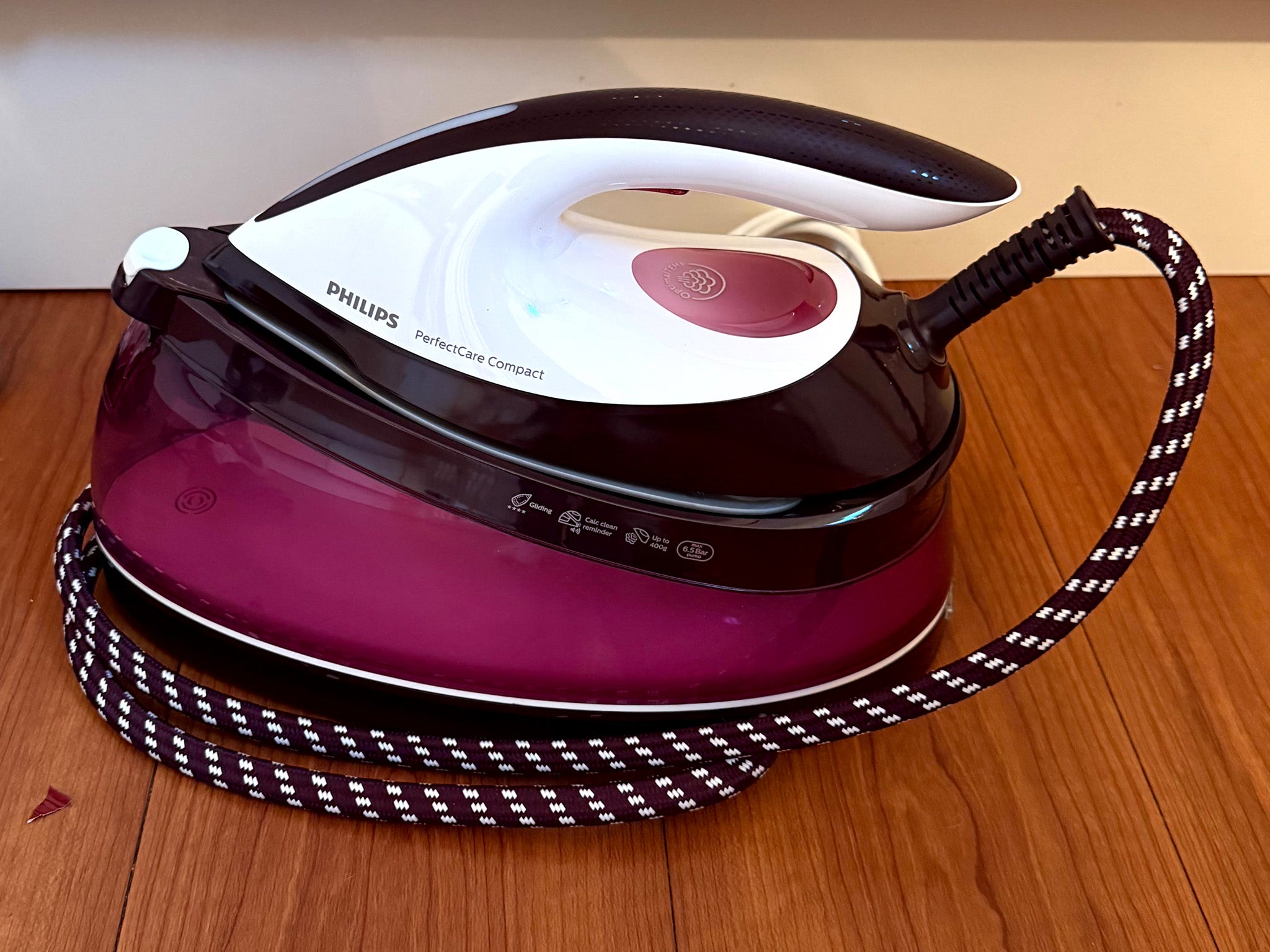
Forgione agrees: “If you’re aiming for that fresh-press, professional finish, an iron is a better choice.” So for structured garments, such as dress shirts, trousers, and anything with pleats or collars, an iron could be the way to go.
When should you use a steamer on clothes?
“Since they don’t directly touch the fabric, steamers are great to use on delicate fabrics like silk, wool and lace,” says Forgione. Unlike irons, steamers can also be used on things such as curtains and upholstery in situ. “The high temperature of the steam can also help eliminate bacteria and remove lingering odours, making them a handy tool for freshening up outfits between washes,” says Forgione.
Davey adds: “Steaming works best on dry, clean clothes, but it also helps to deodorise items that may need a little refresh – perfect for jeans that you may not wash as frequently as the rest of your wardrobe.”
Read more: Best clothes steamers to banish creases
You could even use a steamer to sanitise your kitchen and break down grease. “For example, if you have any sticky residue left on your fridge shelves, you can add the microfibre cloth attachment to steam and wipe the stains away,” explains Forgione.
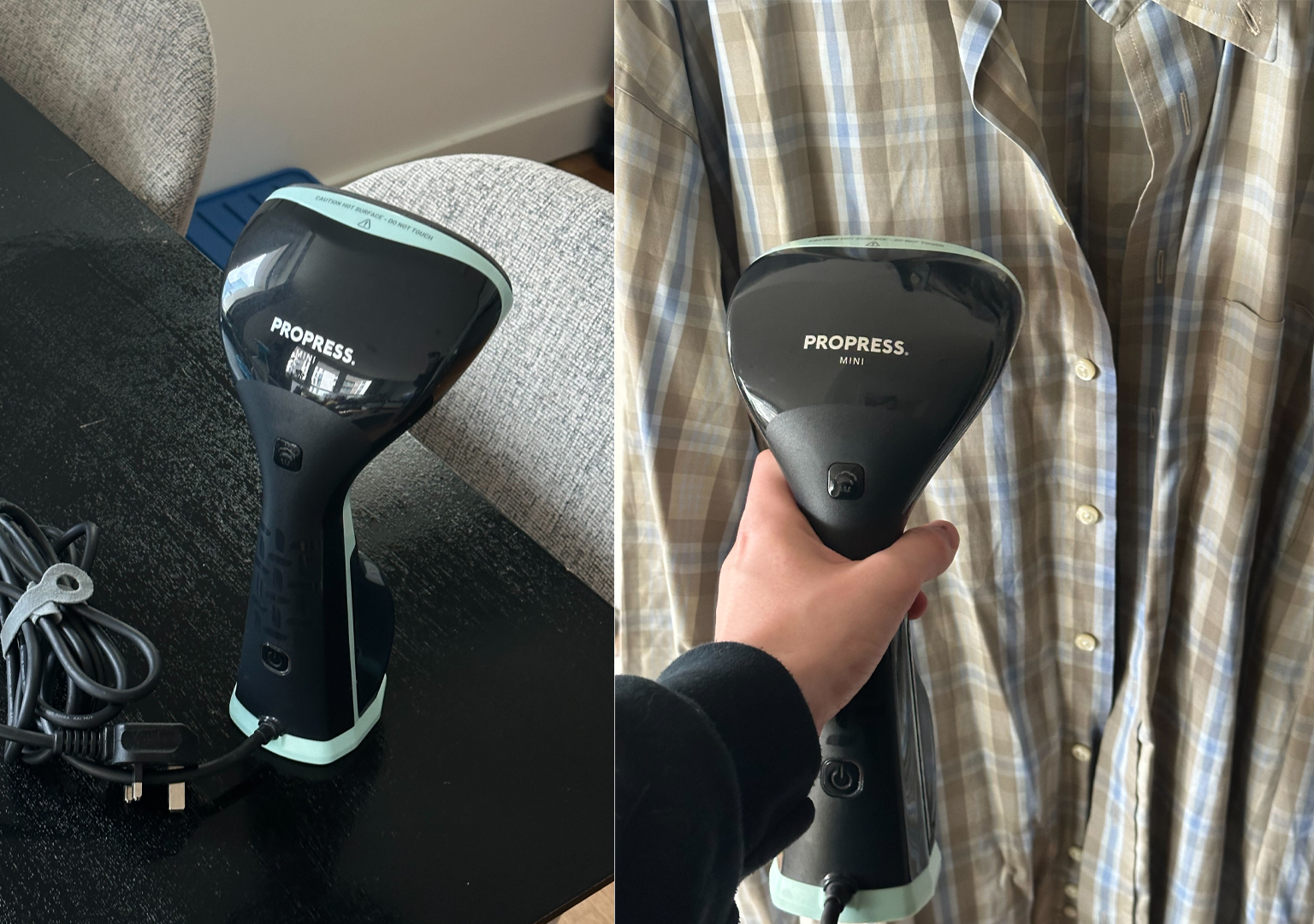
If you’re wondering whether the steamer plates can directly touch the clothes, Davey confirms the answer is yes, but within reason. “Much like how you would an iron, you can use it in a similar way, but be careful if you have a more delicate item such as satin or lace, as it does get very hot,” she explains. Another top tip is to add a clean, white sock over the steamer. “You’ll still get a good amount of heat and steam, but it’ll just stop any spray, which isn’t ideal before you head out.”
Which is faster to use?
“In terms of overall convenience, a steamer often wins,” says Fridja. “By the time you set up an ironing board and wait for the iron to heat up, you could already have steamed your clothes.” He also makes the case that steaming is more “intuitive and natural, since the clothes are hanging as you’d wear them”.
“Generally, steamers are faster,” agrees Forgione. “However, keep in mind that their smaller water tanks may need more frequent refilling.”
Which clothes steamer should you buy?
When selecting a clothes steamer, consider models that come with various attachments for extra versatility (think brushes for upholstery, lint removal, or delicate fabrics). It’s also recommended to check the size of the water tank. “A larger tank allows for longer steaming sessions before needing a refill,” says Forgione. “It’s also important to look at the heating time. If the steamer heats up quickly, you’ll spend less time waiting to use it.”
Russell Hobbs steam genie vacusteam
The Russell Hobbs’s steam genie vacusteam was awarded our best overall steamer by reviewer Zoe Griffin. She wrote it “deliver[ed] the most consistent results of all the models I tried, while also being comfortable to hold and ready to use in just 35 seconds.”
She also added: “It handled a mix of fabrics well, from everyday cotton shirts to more delicate pieces, and I never felt like I had to work harder on certain loads.”
Why we love it
- Safe on delicate fabrics
- Fast heat up time
- Glides smoothly
- Long cord for flexibility
Take note
- Slightly heavier than basic models
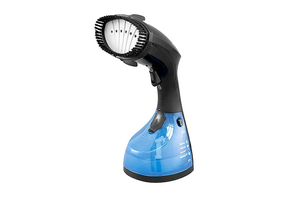
George at Home garment steamer
The George at Home garment steamer is a great budget option, with reviewer Zoe Griffin calling it “surprisingly capable.”
She added: “It heats up in around 30 seconds and produces enough steam to handle everyday creases on T-shirts, shirts and lighter fabrics. You can use it for 10 minutes before it needs refilling, but I found it worked better on lightly crumpled items rather than tackling deeper creases. The included garment brush is a nice addition, helping lift fibres on thicker fabrics.”
Why we love it
- Very affordable
- Quick heat-up
- Lightweight
Take note
- Not the best at tackling deep creases
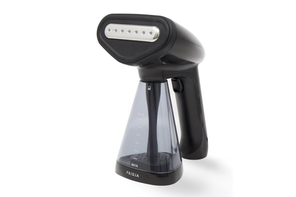
Fridja F10 clothes steamer
“If you’re looking for the best clothes steamer that can handle a mix of different fabrics, the Fridja F10 stands out for its versatility,” writes Zoe Griffin. “It has adjustable steam settings, so I was able to use a gentler setting on delicate items like silk without worrying about damage, while still having enough power to deal with stubborn creases on shirts and dresses.”
Why we love it
- Adjustable settings
- Powerful for a handheld steamer
- Excellent on delicate fabrics
- Useful accessories
- Decent run time
Take note
- Slightly bulkier than travel options
Which iron should you buy?
“If you’re ironing regularly, look for a lightweight model, so it’s easy to lift,” Forgione advises. “Additionally, the more powerful it is, the stronger the steam output, which helps with stubborn creases.”
When it comes to features, Connelly says to look into the kind of soleplate that fits best with the items you’re ironing. “For home use, I recommend ceramic or non-stick soleplates, for smooth gliding and even heat throughout the plate, making it gentler on fabrics,” he says. “A steel soleplate is known for its longevity, strength, and fast heating, although you run the risk of the occasional sticking or snagging on some fabric textures.”
If it’s precision you’re after, “make sure you look at the tip style and go for a precision tip which can help you navigate around buttons and collars more easily.”
Another thing to consider is steam output. For example, “a vertical steam can make steaming hanging garments easier”. As for wattage, “if you’re regularly ironing heavier fabrics and doing several loads at once, I recommend a higher wattage of 1,500W+, which allows the iron to heat up quickly and maintain that temperature for a longer period of time,” adds Connelly.
Finally, consider water tank capacity. “If you tend to do your ironing in one go or large loads at a time, you might look for a larger tank (250ml+) for fewer refills during an ironing session,” he says.
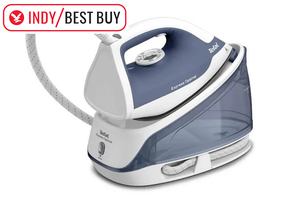
Tefal express optimal steam generator iron
The Tefal express optimal steam generator iron was ranked our best steam iron overall by Zoe Griffin. In her review, she wrote: “If you want more power than a traditional steam iron but don’t want to spend well over £100, this sits in a very appealing middle ground. As a steam generator, the water sits in a separate base, which allows it to deliver a much more consistent level of steam than standard irons, around 120g/min compared with closer to 40g/min. In practice, that meant I could get through creases more quickly and with less effort.”
Why we love it
- Fast heat-up
- Tough on creases
- Glides smoothly
Take note
- Heavy when tank is full
- Bulky to store
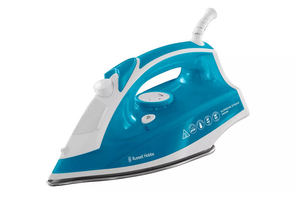
Russell Hobbs supreme steam 2,400W iron
“If you don’t iron often and just want something affordable that gets the job done, this is a solid choice,” writes Zoe Griffin. This model has 2400W of power and around 40g/min continuous steam, so it can be noticeably less powerful than steam generators, but she found it was more than capable for lighter fabrics like shirts.
She added: “It heats up quickly and feels easy to control, which makes it well-suited to quick jobs. The steam boost helps with more stubborn creases and, with a bit of tension on the fabric, I was able to press out deeper wrinkles too.”
Why we love it
- Budget-friendly
- Quick to heat up
- Easy to store
Take note
- Struggles on thicker fabrics
- Stainless steel soleplate drags
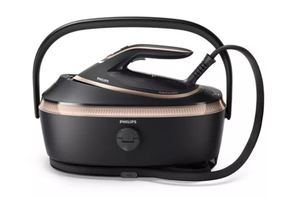
Philips PSG8300/80 steam generator iron
After testing, Zoe Griffin described this iron as “hugely impressive.” It has a strong 210g/min continuous steam and a 850g steam boost that deals with stubborn folds almost instantly.
She added: “Philips makes a lot of its automatic steam and temperature technology, but unlike some gimmicky features, it genuinely worked well in practice. I could move between cotton shirts and more delicate fabrics without adjusting settings, and never had any issues with scorching. The ‘steamglide’ soleplate also lives up to the marketing, gliding exceptionally smoothly across fabrics and making long ironing sessions feel less tiring.”
Why we love it
- Powers through creases with little effort
Meet the experts
- Matt Connelly: CEO and laundry expert at ihateironing
- Isabella Forgione: Small appliance expert at AO
- Harriet Davey: Fashion writer and stylist
Shop more of the best tried and tested clothes steamers and traditional irons