Your questions about pillows answered
What is the best pillow?
The best pillow for you will depend on your sleep preferences, but the Simba hybrid pillow came out on top during testing. It’s the most adaptable option on test, as its cubes of foam let you fine-tune loft and firmness for better neck alignment whether you sleep on your side or back (or even your front, with reduced fill). The cool‑touch face and mesh perimeter regulate heat more effectively than standard foam, and the washable cover is built to last. It’s an investment, and you’ll want to fluff it occasionally, but its consistency and versatility will likely make it the best pick for most people.
If you’re looking to spend less, the best budget pillow during my tests was Slumberdown memory foam plus. It delivers medium‑firm support at a fraction of the price of some competitors. The single‑block core holds your neck in a neutral position for back- and side-sleepers, rebounds reliably and comes with a washable cover. It runs warmer than ventilated or gel foams, and the loft is fixed, but as an upgrade from lumpy hollowfibre, it’s a standout.
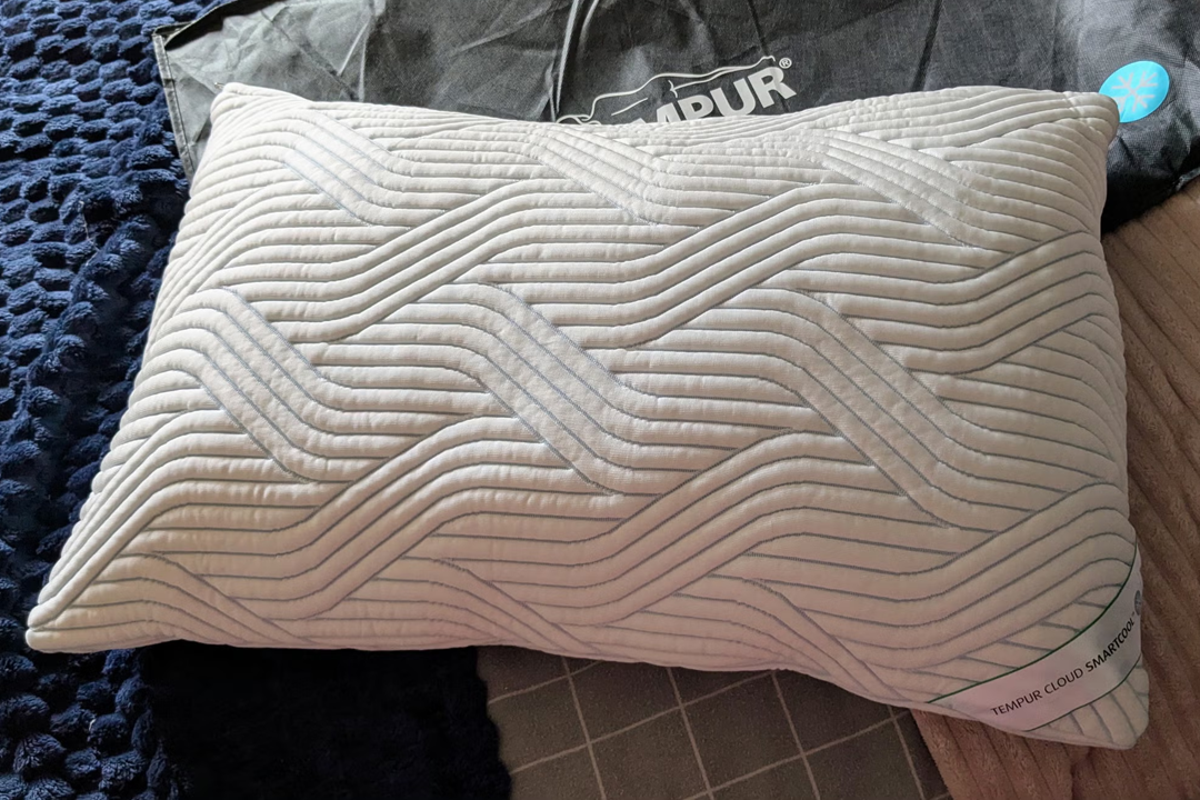
If pressure relief is your priority, Tempur’s cloud smartcool is the premium pick. It’s slow yet even sink disperses hotspots at the ear, jaw, and neck better than anything else I tried, while the cool-touch cover keeps temperatures in check. Pricier, yes, but superb for back-sleepers and anyone managing soreness.
How I tested pillows
I spent months testing and comparing pillows against one another. While doing so, I considered the following criteria:
- Comfort: I paid close attention to how easy it was to fall asleep, and the level of loft (height), sink, and overall comfort of the pillow throughout the night. I ran multi-night trials with logs capturing pressure relief, flip frequency, heat build-up, wake-ups, and any next-morning neck, shoulder, or jaw issues. I aired foam cores for off‑gassing and assessed adjustability. Those with an adjustable loft received bonus points.
- Support: Equally important, I examined firmness and the loft. Softer pillows, such as those filled with down, tend to be less supportive, but you want your pillow to be soft enough that it’s still comfortable. I also assessed how my neck and shoulders felt in the morning.
- Temperature regulation: The filling and cover of a pillow can have an effect on how cool you feel during the night, so I examined whether I felt cool or overheated.
- Value for money: I weighed up overall quality and price, too. Indicators of quality were things such as the materials used, the level of rebound after eight‑hour stretches, and the durability of seams and zips.
What role does a pillow play in sleep quality?
Sleep physiologist Stephanie Romiszewski says: “When people think about sleep quality, they often imagine it is the pillow or mattress that creates it. In reality, the body is built to sleep, and the strongest influences come from internal systems like sleep drive and circadian rhythm. A pillow that feels comfortable simply allows those systems to get on with their job without interruption.”
What type of pillow is right for you?
The type of pillow that’s right for you will depend on what you hope to get from it. These are the five main types of pillow:
- Microfibre: These pillows tend to be among the most affordable and are man-made from synthetic materials such as polyester. They come in a range of different firmness levels, which makes them suitable for most sleeping styles, particularly front-sleepers, as they tend to be flatter. However, they aren’t the most breathable option, as they can retain moisture and heat.
- Feather and down: To be called a down pillow, a product must be made up of at least 70 per cent down feathers, with the rest being regular feathers. Down feathers are typically far softer and better at retaining heat. It’s worth noting they’re more expensive than most other pillows and not always suitable for those with allergies; however, you can find anti-allergy options. As down pillows flatten over time, they’re not the best option for side-sleepers who require more height, but others will usually find it a comfortable choice.
- Memory foam: These pillows are ideal for anyone who struggles with neck pain, as they offer sturdy support by moulding to the shape of your body. While they are durable, memory foam pillows can feel quite rigid and have limited airflow, which means they can get hot. Back- and side-sleepers will benefit most from this type of pillow.
- Wool: If it’s an eco-friendly and naturally hypoallergenic pillow you’re after, wool could be the option for you. Wool pillows help to regulate your temperature, keeping you warm in winter and cool in summer, and are best suited to front-sleepers.
- Latex: An alternative to memory foam, latex pillows share similar properties, as they are firm and supportive. While they are much more breathable than memory foam, latex styles are on the pricey side and can have a distinct smell.
Why you can trust IndyBest reviews
IndyBest is The Independent’s product reviews section, where a team of experts tests sleep-related items over weeks, months or even years. IndyBest pros have tested everything from the best mattresses to the best duvets, and from top-rated silk pillowcases to the best mattress toppers. Their wealth of information and expert insights guide the product selection and testing process.
Caroline Preece is an expert product tester and journalist with years of experience. She specialises in home and lifestyle topics, particularly sleep, such as her in-depth tests of the best cooling pillows, electric blankets, and sunrise alarm clocks. She knows exactly how to assess sleep products for quality and value for money.
Meet the expert
Stephanie Romiszewski is a sleep physiologist with two decades of experience. She has researched and treated clinical sleep disorders like insomnia and CPAP therapy.
To get serious about your beauty sleep, check out the best silk pillowcases that work wonders for your hair and skin